
Painting the exterior window trim can significantly enhance the overall look of your home. It’s a relatively simple and cost-effective way to give your windows a fresh and polished appearance. Whether you’re tackling this project as part of a more extensive home makeover or just looking to update the exterior of your house, painting the window trim can make a significant difference. In this article, we’ll discuss the importance of painting the exterior trim, how to choose the right paint, the steps to paint your window trim correctly and share some tips for achieving professional-looking results. So let’s dive in!
Why Is It Important To Paint The Exterior Trim Of Your Window?
Painting the exterior trim of your window serves both aesthetic and practical purposes. From an aesthetic standpoint, fresh paint can enhance your home’s curb appeal, making it look more attractive and well-maintained. It can also tie together the overall color scheme of your exterior.
Practically, painting the window trim provides a protective barrier against the elements. It helps to prevent moisture from seeping into the wood, which can lead to rot and damage over time. Additionally, a fresh coat of paint can act as a shield against UV rays, reducing the risk of fading and prolonging the lifespan of the window trim.
How To Choose The Right color For A Window Trim?
Choosing the right color for your window trim is crucial for achieving long-lasting and satisfactory results. Here are few elements to consider when selecting the color:
- Quality: Opt for a high-quality exterior paint formulated explicitly for trim and wood surfaces. Quality paints offer better durability, adhesion, and resistance to weathering.
- Finish: For window trim, it’s recommended to choose a satin or semi-gloss finish. These finishes balance durability and aesthetics, as they are easier to clean and offer better moisture resistance.
- Color: Select a color that complements your home’s exterior and fits your desired color scheme. Neutral colors like white or off-white are popular window trim choices as they work well with different architectural styles.
- Brand: Stick with reputable paint brands with a proven quality and performance track record. Research customer reviews and consult with professionals if needed.
Steps To Paint Your Window Trim Correctly
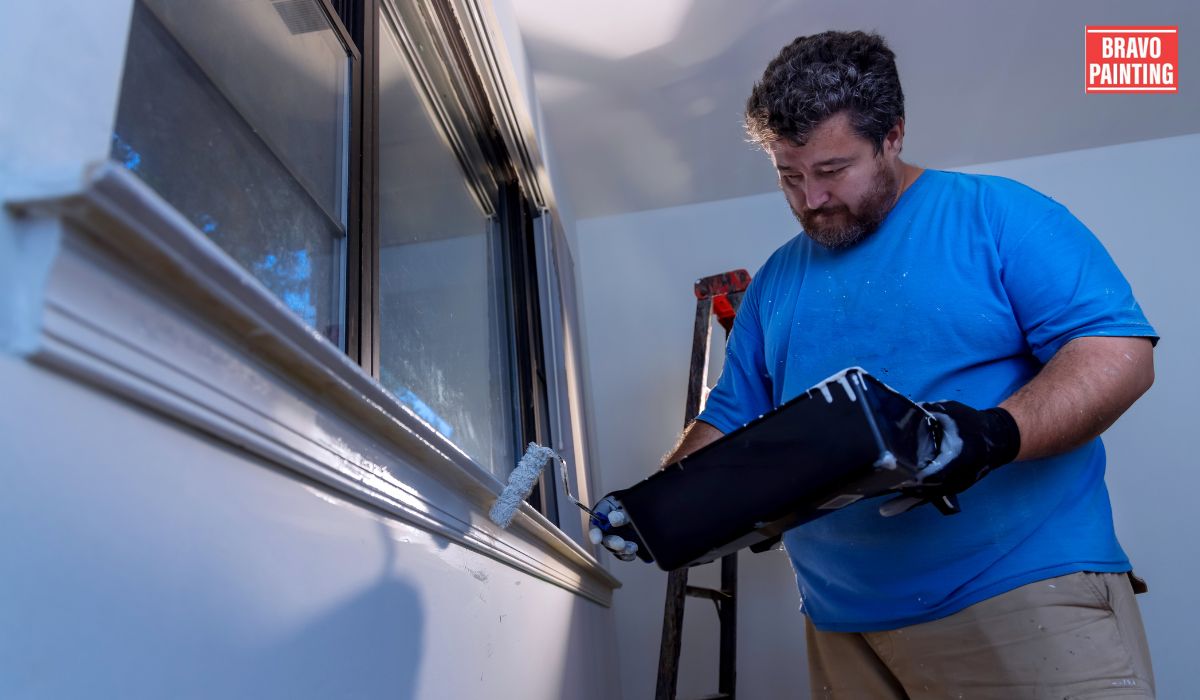
Follow these steps to ensure a successful and professional-looking paint job for your window trim:
- Prepare the surface: Clean the window trim thoroughly to remove dirt, dust, and loose paint. Use a scraper to remove old peeling paint, & sand the surface to create a smooth and even base.
- Prime the trim: Apply a coat of primer specifically designed for exterior wood surfaces. Primer helps to seal the wood and provides better adhesion for the color. Follow the guidelines provided by the manufacturer and allow the primer to dry completely.
- Mask off surrounding areas: Use painter’s tape to protect the adjacent surfaces, such as the glass, siding, or brickwork. This will ensure clean and crisp lines.
- Apply the paint: Begin by using a brush to meticulously cut in along the edges of the trim. Next, proceed to apply the paint to the larger surfaces using either a brush or a roller. Work in small sections, applying thin and even coats. Wait for each coat to dried entirely before proceeding with the following application.
- Inspect and touch up: Once the paint is dry, inspect the window trim for any missed spots or imperfections. Perform touch-ups as necessary to achieve a seamless and impeccable finish.
Tips For Painting Window Trim Like A Pro
Here are few additional tips to help you achieve professional-looking results when painting your window trim:
- Choose the right weather: Pick a day with mild temperatures and low humidity to ensure optimal paint drying conditions. Avoid painting in direct sunlight or windy days, as these conditions can affect the paint application.
- Use high-quality tools: Invest in good-quality brushes and rollers to ensure smooth and even application. Quality tools can make a noticeable difference in the final result.
- Work systematically: Start from one side of the window and work your way around, following a logical pattern. This will help you maintain consistency and ensure all areas are included.
- Apply thin coats: It’s better to apply multiple thin coats of paint than a single heavy coat. Thin coats dry faster and are less likely to drip or sag.
- Take time: Rushing the painting process can lead to mistakes and uneven coverage. Take your time, work patiently, and pay attention to detail.
How Often Should You Repaint Exterior Window Trim?
Wood window trim should be repainted every 4–5 years to stay ahead of moisture damage and UV breakdown. In Georgia’s humid climate, that interval may shrink to 3–4 years on south- and west-facing windows that take direct afternoon sun. Watch for early warning signs: hairline cracking in the paint film, chalky residue when you rub the surface, faded color, or any peeling near the bottom edge of the trim where water tends to pool. Catching these signs early means a quick repaint job — ignoring them often leads to wood rot, which costs three to five times more to fix than a routine paint refresh.
The Best Time of Year for Painting Window Trim Exterior in Georgia
Timing is one of the most underrated factors in a long-lasting exterior trim job. The sweet spot for painting window trim exterior in the Atlanta and Marietta area is mid-April through early June, and again from mid-September through October. During these windows, daytime highs sit in the 60s and 70s, overnight lows stay above 50°F, and humidity is moderate. Paint cures evenly under those conditions, which means better adhesion and a finish that lasts years longer.
Avoid painting in July and August when surface temperatures on sun-baked trim can exceed 120°F, causing paint to skin over before it has time to level — that’s where brush marks, blistering, and premature peeling come from. Also skip days with rain in the 24-hour forecast, since moisture in the wood will trap under the new coat and lift it within months.
Trim Materials Common in Georgia Homes — and What They Need
Not all exterior trim is treated the same way:
- Wood trim (most common on older Atlanta homes): Needs a stain-blocking oil or shellac-based primer on bare spots, then two coats of 100% acrylic exterior paint.
- HardieTrim or fiber-cement trim: Often comes factory-primed but should be re-primed at cut edges. Use a high-quality acrylic exterior — no oil-based products.
- PVC or composite trim: Skip oil-based primers. Use a bonding primer and a flexible acrylic top coat that can move with expansion and contraction.
- Aluminum-clad trim: Clean with TSP, scuff lightly with a fine pad, and use a direct-to-metal (DTM) acrylic. Most aluminum trim doesn’t need primer if it’s clean and intact.
Matching the product to the material is the difference between a paint job that lasts seven years and one that fails in two.
Start Your Window Trim Paint Project Today!
Painting the exterior window trim is a rewarding and transformative DIY project that can give your home a fresh and updated look. By following these steps outlined in this article and applying the tips provided, you’ll be able to achieve professional results that will enhance your home’s overall appearance and value. So gather your painting supplies, choose the right paint color, and start your window trim paint project today!
Frequently Asked Questions About Painting Window Trim Exterior
1. How much does it cost to paint exterior window trim?
For a typical single-family home in the Atlanta metro area, professional exterior window trim painting runs $8–$15 per linear foot, or roughly $400–$1,200 for an average home with 10–15 windows. Cost depends on the trim material, height (second-story windows require ladder or lift work), the condition of the existing paint, and whether any wood repair or caulk replacement is needed before painting. DIY costs run $150–$300 in materials but typically take a homeowner a full weekend per side of the house.
2. Do you have to prime exterior window trim before painting?
Primer is required on bare wood, raw cut edges, areas with stain bleed, and surfaces where you’re making a major color change (dark to light, or vice versa). If the existing paint is intact, clean, and you’re recoating in a similar color, you can skip a full primer coat and spot-prime only the bare or repaired areas. Skipping primer on bare wood is the single most common reason exterior trim paint fails within two years — the wood absorbs moisture, the paint film loses adhesion, and peeling starts at the bottom edges first.
3. What is the best paint for exterior window trim?
A 100% acrylic exterior paint in satin or semi-gloss finish is the industry standard for wood and fiber-cement trim. Top-performing products include Sherwin-Williams Emerald and Duration, and Benjamin Moore Aura Exterior. These resist UV fade, flex with temperature changes, and clean easily. Avoid flat finishes (they hold dirt and don’t shed water well) and avoid bargain paints with low solids content — they fail two to three years sooner, which erases any upfront savings.
Exterior Painting